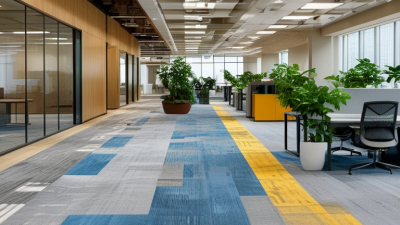
7 Tips for Choosing Office PVC Carpet?
Choosing Office Pvc Carpet is more than selecting an attractive surface. It affects foot comfort, cleaning routines, noise control, and long-term maintenance costs. A busy office entrance faces muddy shoes, rolling chairs, coffee spills, and constant pressure from daily movement. The right material must handle these details without looking tired after a few months.
Commercial flooring consultant David M. Koenig explains, “A practical office floor should perform well during the busiest hour, not only impress on installation day.” That principle guides this article. The seven tips examine carpet thickness, backing quality, slip resistance, stain protection, acoustic performance, installation conditions, and total ownership cost. Each factor deserves attention before comparing colors or patterns. Appearance matters. It is not everything.
A small sample can mislead. Under showroom lighting, a surface may look softer, darker, or more luxurious than it appears beside office windows. Test the carpet near desks and corridors. Walk across it with ordinary shoes. Place a chair on the sample and move it repeatedly. These simple checks reveal more than a brochure.
Some choices remain imperfect. A thicker carpet may feel comfortable but trap more dirt. A lower-cost option may reduce the initial budget but require earlier replacement. Good decisions come from balancing evidence, usage, and realistic maintenance habits. This guide offers practical questions, not one universal answer. Your office has its own traffic patterns, cleaning schedule, and design pressures. That context should shape the final Office Pvc Carpet selection.
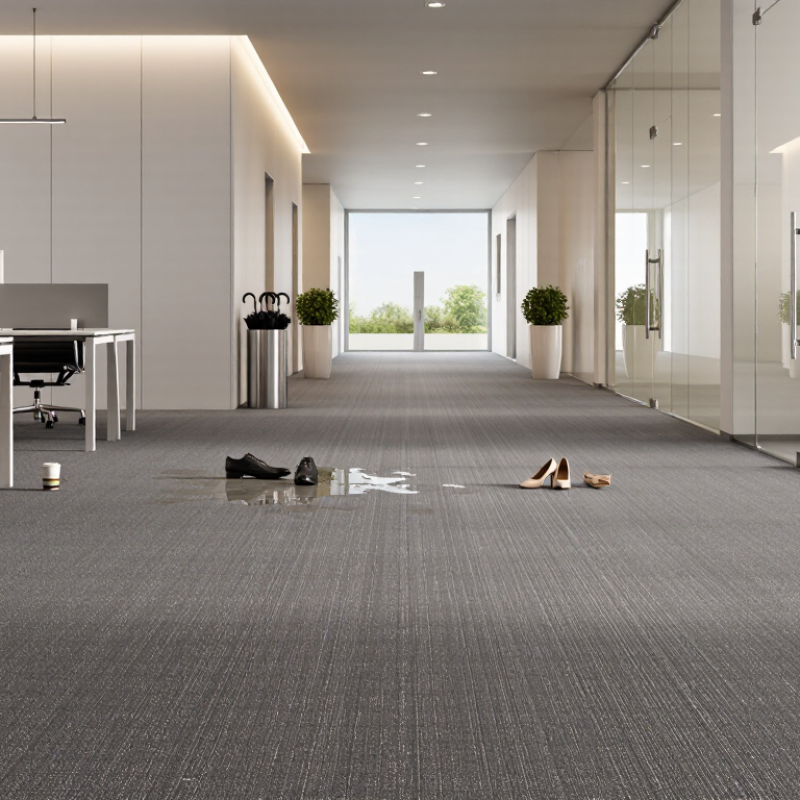
Assess Traffic: Choose EN ISO 10874 Class 33 for Heavy Office Use
Tip: Assess traffic before choosing a pattern. EN ISO 10874 Class 33 is designed for heavy commercial use, making it suitable for busy offices, corridors, reception areas, and shared workspaces. Count daily users, not just desks. Rolling chairs, wheeled cabinets, and grit from entrances can wear flooring faster than expected. Class 33 offers a stronger starting point, but it is not indestructible.
In real office installations, entrance zones often show damage first. Place durable mats near exterior doors, and keep them clean. This simple detail reduces sand and moisture reaching the PVC surface. Check the product’s technical sheet for slip resistance, dimensional stability, and cleaning guidance. A classification label alone does not answer every practical question.
Tip: Match installation quality with traffic levels. The subfloor should be flat, dry, and properly prepared. Poor preparation can cause visible joints, lifting, or uneven wear, even with Class 33 flooring. I have seen attractive materials perform poorly because installation time was shortened. That mistake is easy to repeat. Review chair movement, maintenance routines, and sunlight exposure before ordering. Also request samples and test them under actual office lighting. Dark colours can reveal dust, while very pale surfaces may show scuffs quickly. Think beyond the showroom.
7 Tips for Choosing Office PVC Carpet? — Assess Traffic: Choose EN ISO 10874 Class 33 for Heavy Office Use
Note: EN ISO 10874 use classes describe intended areas of use. Always confirm the product's technical declaration, installation instructions, fire requirements, and local building regulations before specification.
Verify Safety: Require EN 13501-1 Bfl-s1 and DIN 51130 R9 Ratings
When choosing office PVC carpet, verify safety ratings before comparing colors or textures.
EN 13501-1 Bfl-s1 means the flooring has limited contribution to fire and produces low smoke. The “fl” classification applies specifically to floor coverings. It does not mean the material is fireproof. Ask for a current, product-specific test report, not only a sales statement. Check the tested thickness, backing, adhesive, and installation method. Small changes can affect performance.
The DIN 51130 R9 rating indicates basic slip resistance
under a ramp test with safety footwear and oil. It suits many ordinary office areas, but it is not a guarantee against wet-floor accidents. HSE workplace injury statistics for 2023/24 continue to identify slips, trips, and falls on the same level as a major injury source. Entrance zones deserve extra attention. Rainwater, smooth PVC, and poor cleaning can quickly change real-world traction. R9 may be insufficient near external doors, kitchens, or washrooms. Consider higher resistance after reviewing the site conditions.
Request both certificates and installation records.
Confirm that the documents match the exact flooring batch. Also inspect a sample after cleaning. It sounds obvious. It is often skipped. A polished appearance can hide weak grip, while a strong rating may fail when seams lift or moisture remains underneath. Safety decisions should combine laboratory evidence, installer experience, and the building’s daily traffic pattern.
Check Indoor Air Quality: Review VOC Results Tested to ISO 16000
Choosing office PVC carpet requires more than color, wear rating, and installation cost.
Indoor air quality deserves equal attention, especially in tightly sealed offices. The U.S. Environmental Protection Agency reports that indoor pollutant concentrations are often two to five times higher than outdoors
(EPA, Indoor Air Quality, 1989).
That evidence is broad, not a PVC-carpet prediction. Still, it justifies careful VOC screening.
Ask suppliers for complete emissions reports, not a single “low-VOC” claim.
ISO 16000-6 identifies and quantifies volatile organic compounds using thermal desorption and gas chromatography. ISO 16000-9 assesses emissions inside a controlled test chamber. Temperature, humidity, air exchange, and testing duration can change the result. Those conditions matter. A 24-hour result may differ from a 28-day result. Check the carpet, adhesive, backing, and seam materials separately when possible. A floor can pass alone yet perform differently after installation.
Read individual compounds alongside TVOC.
TVOC is a screening indicator, not a complete health judgment. The German Environment Agency explains that substance-specific evaluation remains essential because VOC toxicity varies. Compare results with applicable indoor-air criteria, such as European LCI values, and request the laboratory’s accreditation details. Keep the test report. On site, ventilate before occupancy and record the installation date. This is practical, but not perfect; offices also contain cleaners, printers, and human activity.
I would question any report that hides test duration or omits measured compounds.
Compare Installation Costs: Assess 5–7 mm Thickness, Warranty, and LCA Data
Choosing office PVC carpet starts with a realistic installation-cost comparison. Request itemized quotes for material, adhesive, subfloor repairs, trimming, waste, transitions, and labor. Removal and furniture moving can quietly increase the final bill. Ask whether the quote includes evening work or temporary office relocation. Downtime has a cost too.
For busy offices, compare products between 5 and 7 mm thick. Thicker flooring may improve comfort and acoustic performance, but it can require more leveling and create higher door-clearance costs. A 5 mm option may install faster, yet it may feel less forgiving over uneven floors. Check wear-layer specifications, slip resistance, cleaning needs, and expected traffic. I once saw a low quote rise after moisture testing exposed a weak subfloor. That mistake was avoidable.
Read the warranty beside the installation instructions. Confirm coverage for commercial traffic, seam failure, color change, and labor costs. Look for exclusions involving poor preparation, unsuitable cleaning agents, or unapproved adhesives. Then review LCA data, not just environmental claims. Check the declared service life, manufacturing energy, recycled content, transport assumptions, and end-of-life route. Prefer data supported by a verified environmental declaration. Be cautious with impressive percentages. They may use different boundaries. Compare like with like. Record every assumption before approval. Some choices still involve judgment. That is uncomfortable, but honest.