Top Glued Down Vinyl Flooring Suppliers for Global Buyers
Choosing reliable suppliers requires more than comparing catalog prices. Global buyers must assess material quality, production control, communication, and delivery performance. This guide introduces leading Glued Down Vinyl Flooring suppliers for commercial and residential projects worldwide. It focuses on evidence rather than attractive claims.
Experienced buyers often request physical samples before signing contracts. They inspect color consistency, backing strength, surface texture, and installation behavior. A warehouse test can reveal curling, adhesive failure, or visible seams. These details matter. Supplier evaluation should also cover wear-layer thickness, dimensional stability, moisture resistance, and available safety documentation. Reputable manufacturers explain their testing methods clearly. They can provide factory photos, production records, certifications, and recent customer references. Slow answers may signal weak support.
However, supplier rankings are never completely universal. A factory with excellent export experience may not suit a small custom order. Another supplier may offer competitive prices but limited technical assistance. These weaknesses deserve attention. Shipping distance, minimum order quantities, packaging quality, and payment terms can change the real purchase cost. Buyers should compare complete quotations, not isolated unit prices. This overview examines supplier capabilities, product ranges, manufacturing experience, and service reliability. It also encourages careful verification before a final decision. A polished website is not proof of consistent performance. Practical checks remain essential.
Glued-Down Vinyl Flooring Explained: Formats, Layers, and 6–30 mil Wear Ratings
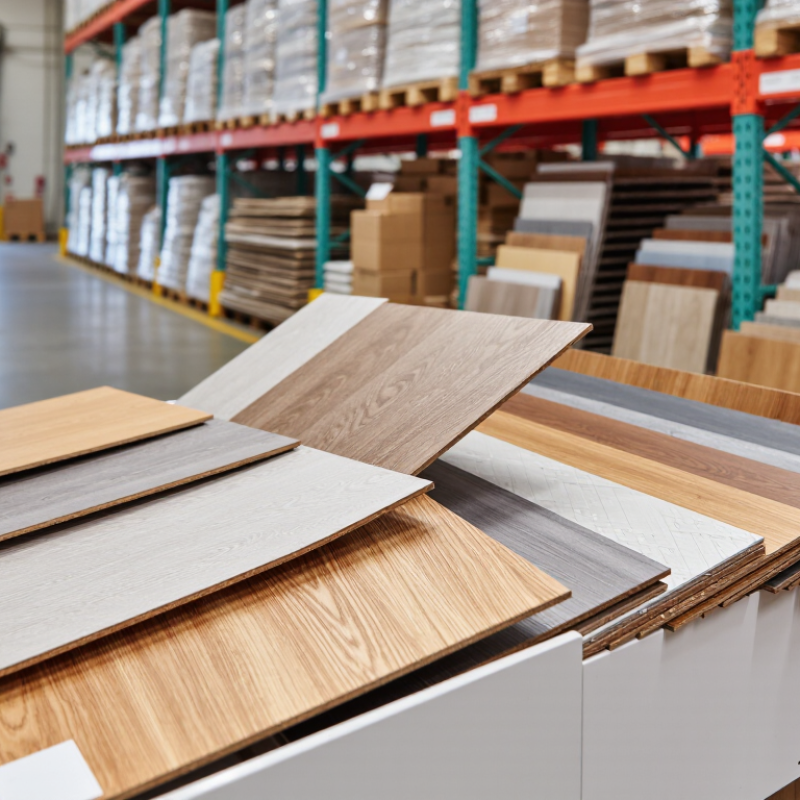
Glued-down vinyl flooring is supplied in three practical formats: planks, tiles, and sheets. Planks imitate wood, while tiles suit stone or geometric designs. Sheets reduce seams and can work well in larger rooms. Each format needs a suitable adhesive and a clean, level subfloor. Small surface defects may telegraph through the finished floor.
A typical plank includes a protective finish, wear layer, printed design film, vinyl core, and backing. The wear layer is measured in mils, with one mil equal to 0.001 inch. A 6 mil layer may suit light residential use. Ratings from 12 to 20 mil often support busier homes and moderate commercial areas. Products rated 20 to 30 mil are commonly selected for demanding commercial traffic. However, thickness alone does not determine service life.
Ask suppliers for technical data, adhesive compatibility, moisture limits, and test samples. A reliable supplier should explain whether ratings follow a recognized testing method. Inspect the sample under strong light; surface texture and color can look different after installation. In site work, subfloor moisture and unevenness cause more failures than the vinyl itself.
That matters. Measure twice.
I have seen attractive flooring fail because installers rushed preparation. Buyers should compare warranty terms with actual traffic, cleaning routines, and local installation conditions. A thicker layer is useful, but it cannot correct poor bonding or careless maintenance.
Verify Adhesives, Subfloor Moisture, and ASTM F2170 RH Limits Before Purchase
Top Glued Down Vinyl Flooring Suppliers for Global Buyers
Global buyers should evaluate glued-down vinyl suppliers through installation evidence, not catalog images alone. Ask for the adhesive technical data sheet, safety data sheet, and compatibility statement. The adhesive must suit the vinyl backing, concrete type, temperature range, and expected traffic. A low price can become expensive after blistering, open seams, or difficult repairs.
Concrete moisture deserves equal attention. ASTM F2170 measures internal relative humidity through in-situ probes, while a surface meter may miss moisture deeper in the slab. Confirm test depth, probe calibration, reading time, and recorded locations. ASTM F2170 itself does not create one universal RH limit. The adhesive and flooring manufacturer set the allowable level, often between 75% and 85% RH. Never assume 75% is automatically acceptable. That shortcut can fail.
Tips: Request a recent test report before purchase. Check whether the project uses a slab drying from one side or two. Keep photographs of probe locations, substrate preparation, and adhesive coverage. Ask the supplier to explain the approved moisture-control system in writing. Samples should be tested on the actual subfloor, not only a clean showroom panel. This step feels slow. It is still cheaper than replacing a finished floor. Even experienced teams can overlook weak spots near doors, joints, and damp exterior walls. Supplier answers should be specific, dated, and technically consistent.
Rank Suppliers by VOC Certifications, Warranty Coverage, and Cost per m²
Top Glued Down Vinyl Flooring Suppliers for Global Buyers
Rank Suppliers by VOC Certifications, Warranty Coverage, and Cost per m²
A reliable supplier ranking should begin with verified VOC performance, not attractive samples. I would place suppliers with current FloorScore, GREENGUARD Gold, or equivalent regional certificates in the highest tier. Ask for certificate numbers, testing dates, and covered product collections. A factory certificate may not cover every color or thickness. That detail matters.
Warranty coverage comes next. Strong suppliers usually provide separate residential and commercial terms, with clear limits for wear, fading, moisture, and adhesive failure. Look for coverage lasting 10 to 20 years in homes and five to 15 years in commercial spaces. Installation requirements should be written plainly. Vague warranty language creates expensive disputes.
Cost per m² needs a wider calculation. Glued-down vinyl may cost about US$12–28 per m² before freight, tax, adhesive, and local labor. Lower quotes can hide thinner wear layers or weaker backing. I compare the delivered price, not the factory price. I also request a small batch sample and test it under office chairs, sunlight, and damp cleaning conditions. My shortlist is never perfect. Regional standards, shipping changes, and project waste can alter the ranking. A supplier with slightly higher material pricing may still offer better value when certification, replacement support, and stable production are included.
Top Glued Down Vinyl Flooring Suppliers for Global Buyers
Anonymized supplier benchmark ranked by VOC certification coverage, warranty duration, and estimated glued-down vinyl flooring cost.
VOC coverage counts widely recognized indoor-air certifications or compliance programs, including FloorScore, GREENGUARD Gold, Eurofins Indoor Air Comfort Gold, and Blue Angel. Costs are representative global purchasing ranges in USD per m², excluding installation, freight, duties, and taxes.