Leave Your Message
Choosing the right Plastic Pvc Carpet can feel simple until flooring reaches a warehouse, hotel, vehicle, or family home. Surface texture, backing quality, roll size, odor, and cleaning performance can change the buying decision.
This guide reviews seven practical Plastic Pvc Carpet options for global buyers. Each option serves a different purpose. Some provide strong waterproof protection near entrances and kitchens. Others offer softer textures, anti-slip patterns, or flexible designs for temporary commercial spaces. A thick PVC backing may improve stability, while a thinner construction can reduce shipping weight and installation effort.
Details matter.
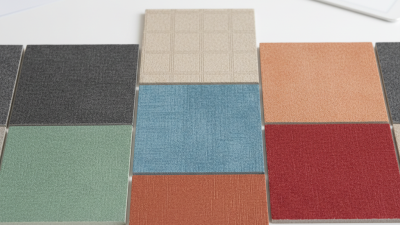
Experienced buyers should request product samples before placing large orders. A sample can reveal curling edges, color variation, surface wear, and unpleasant odor. Product data should also identify thickness, weight, roll dimensions, backing material, and recommended installation conditions. These points are more useful than attractive catalog images alone.
International purchasing requires careful verification. Testing documents, labeling rules, fire-performance claims, and chemical information may differ between markets. Buyers should confirm requirements with qualified local professionals and import authorities. Do not assume that one certificate applies everywhere.
The seven choices below are not universal winners. A hotel corridor may need heavy-duty wear resistance, while a retail display may prioritize appearance and quick replacement. Budget, climate, traffic levels, and cleaning routines all matter. Even this comparison has limits, because supplier quality can vary between production batches.
Use the recommendations as a practical screening tool. Compare samples, technical sheets, warranties, and supplier communication before committing. A reliable supplier should answer clearly, provide consistent documentation, and explain realistic product limitations.
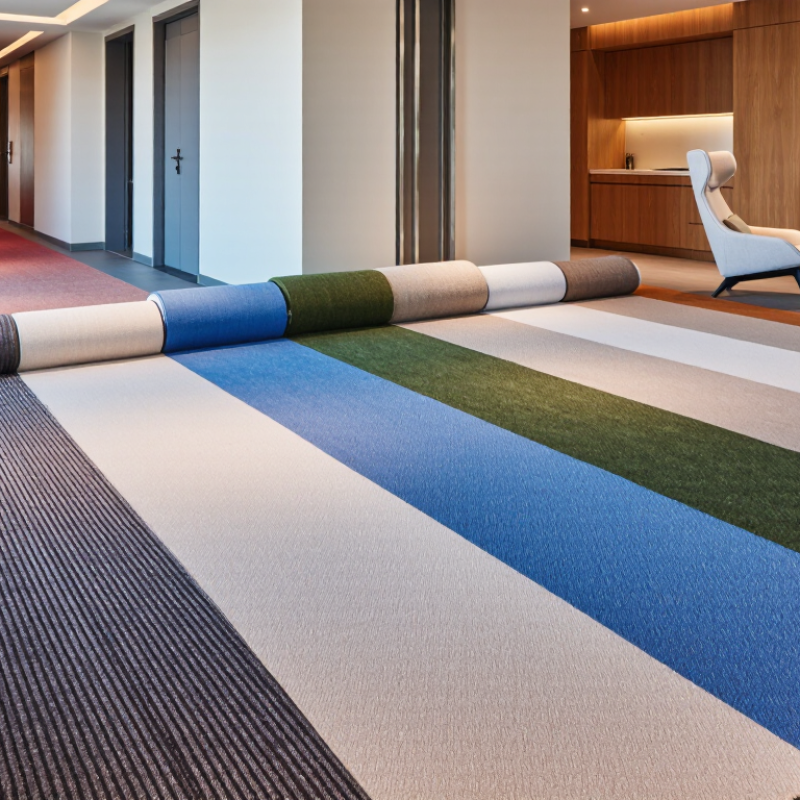
Plastic PVC carpet is a flexible floor covering made mainly from polyvinyl chloride. It is not a traditional fiber carpet. Its textured surface can imitate woven patterns while resisting moisture, stains, and daily abrasion. Many products have a foam or PVC backing for comfort and floor protection. Common uses include entryways, kitchens, corridors, offices, retail spaces, exhibitions, and vehicle interiors. A wet entrance shows its value quickly. Dirt stays near the surface and can usually be removed with water and mild detergent. However, PVC carpet is not automatically slip-proof. Texture, drainage, installation, and cleaning habits all affect safety.
Tips: Check thickness, roll width, backing type, edge treatment, and surface texture before purchasing. Ask for abrasion, slip-resistance, and fire-performance test data that matches the intended market. Confirm whether the material releases a strong odor after unpacking. Ventilation may be necessary. Measure the floor carefully, because small errors become expensive when ordering large rolls. Keep the product flat and acclimatized before installation. Adhesive compatibility also matters, especially on concrete or painted floors.
For global buyers, practical reliability matters more than attractive photographs. A carpet may look dense but feel hard underfoot. Another may feel soft but wear faster in busy aisles. Color can also change under warehouse lighting. Request samples and compare them beside the actual floor. PVC can crack in severe cold or deform near intense heat, so climate and placement deserve attention. It is a useful material, but not a perfect one.
Plastic PVC carpet is a floor-covering material made primarily from polyvinyl chloride, often combined with a polyester or fiberglass backing. It is valued for water resistance, easy cleaning, dimensional stability, and suitability for commercial, residential, industrial, and outdoor-adjacent spaces.
| No. | PVC Carpet Option | Typical Construction | Common Thickness | Recommended Use | Key Advantages | Cleaning & Maintenance | Important Buying Considerations |
|---|---|---|---|---|---|---|---|
| 1 |
PVC Coil Mat Carpet Open-loop surface |
Flexible PVC coils welded or bonded to form a porous, textured mat. | Approximately 10–16 mm | Building entrances, corridors, lobbies, wet areas, and high-footfall transition zones. | Excellent scraping and drainage performance. Helps remove dirt from footwear and allows water to pass through the open structure. | Shake, vacuum, hose, or pressure-rinse when permitted. Allow the mat to dry fully. | Check coil density, edge finishing, backing type, drainage capacity, and resistance to low temperatures. |
| 2 |
PVC Ribbed Entrance Mat Textured ribs |
Solid PVC mat with raised parallel ribs designed to trap dirt and moisture. | Approximately 8–12 mm | Retail entrances, offices, schools, hotels, apartment buildings, and covered outdoor entrances. | Durable, water-resistant, easy to cut, and suitable for frequent pedestrian traffic. | Vacuum regularly and wipe with mild detergent. Avoid abrasive brushes that may damage the ribbed surface. | Review slip-resistance data, total weight per square metre, roll width, beveled edges, and compatibility with recessed wells. |
| 3 |
PVC Needle-Punch Carpet Tile Modular format |
Textile fibers needle-punched into a PVC or PVC-backed tile, commonly manufactured in square modules. | Approximately 4–8 mm | Offices, retail spaces, schools, meeting rooms, and areas requiring localized replacement. | Modular installation reduces waste and allows individual damaged tiles to be replaced without removing the entire floor. | Vacuum frequently and spot-clean spills promptly. Use cleaning chemicals recommended for PVC-backed textile flooring. | Confirm tile dimensions, backing stability, colorfastness, indoor-air requirements, adhesive compatibility, and installation substrate flatness. |
| 4 |
PVC Foam-Backed Carpet Cushioned backing |
Printed or textured PVC wear layer laminated to a flexible foam PVC backing. | Approximately 2–5 mm | Kitchens, utility rooms, workshops, temporary retail displays, and areas where underfoot comfort is useful. | Softer underfoot feel, moisture resistance, simple roll installation, and easy surface cleaning. | Sweep or vacuum, then mop with diluted neutral detergent. Prevent water from accumulating beneath the material. | Check foam recovery, dimensional stability, odor, fire classification, roll length, and suitability for heavy furniture or wheeled traffic. |
| 5 |
PVC Printed Floor Carpet Decorative surface |
Multi-layer PVC construction with a printed decorative film and a transparent protective wear layer. | Approximately 1.5–3 mm | Residential interiors, hospitality areas, exhibition booths, shops, playrooms, and decorative temporary installations. | Wide design selection, consistent appearance, water resistance, and relatively fast installation. | Use a soft broom, vacuum, or damp mop with a neutral cleaner. Avoid solvents and sharp dragging objects. | Compare wear-layer thickness, print clarity, slip performance, lightfastness, total VOC information, and batch color consistency. |
| 6 |
PVC Anti-Fatigue Mat Carpet Ergonomic support |
Resilient PVC or PVC foam with a textured top surface and cushioning base. | Approximately 9–19 mm | Production lines, packing stations, cashier areas, laboratories, workshops, and standing workstations. | Reduces perceived standing fatigue, provides cushioning, and offers a textured surface for improved footing. | Sweep or vacuum daily in dusty areas. Wipe with mild detergent and inspect edges for lifting or curling. | Check compression recovery, chemical resistance, edge design, temperature range, chair-castor suitability, and maximum load. |
| 7 |
PVC Grid Drainage Mat Perforated structure |
Interlocking or continuous PVC grid with openings that permit liquid drainage and air circulation. | Approximately 10–20 mm | Swimming-pool surrounds, locker rooms, showers, spas, food-processing support areas, balconies, and wet service zones. | Strong drainage capability, quick water release, easy section replacement, and good suitability for wet environments. | Lift or unlock sections where applicable, rinse underneath, and disinfect using a cleaner compatible with PVC. | Verify slip-resistance test results, drainage-hole dimensions, interlocking strength, hygiene requirements, and resistance to chlorine or oils. |
Specifications shown are typical market ranges rather than universal standards. Buyers should request technical data sheets, test reports, sample approval, installation guidance, and destination-market compliance documents before placing a bulk order.