How to Calculate LVP Cost Per Square Foot in 2026?
Planning a luxury vinyl plank floor begins with a clear Lvp Per Square Foot estimate. The advertised price is only one part of the project. A plank priced at $3.25 per square foot may reach $6 or more after labor, underlayment, trim, delivery, and waste. Regional wages, room shape, and subfloor condition can change the final figure quickly. A flat bedroom is easier to price than a hallway with several doorways. Small details matter.
This guide explains how to calculate LVP cost per square foot in 2026 using practical, transparent steps. It separates material costs from installation, removal, floor preparation, transitions, and sales tax. You will also see how to measure usable floor area and add a sensible waste allowance. Usually, 5% to 10% is suitable, but angled cuts may require more. Check the manufacturer’s installation instructions before choosing underlayment or adhesives. Product specifications and written contractor estimates provide stronger evidence than online averages. Local quotes remain essential.
No formula is perfect.
Even experienced estimators can miss hidden moisture damage or uneven concrete beneath old flooring. That limitation deserves attention. By comparing itemized estimates, checking plank warranties, and testing the subfloor, homeowners can build a more dependable 2026 budget. The goal is not the lowest headline price. It is a realistic cost that survives installation day.
What LVP Cost Per Square Foot Includes in 2026
How to Calculate LVP Cost Per Square Foot in 2026?
What LVP Cost Per Square Foot Includes in 2026
LVP cost per square foot includes more than the planks. In 2026, a practical installed estimate often falls between $4 and $12 per square foot. Angi’s 2025 flooring cost guide reports a wider vinyl flooring range of about $2 to $14 installed. HomeGuide reports similar variation. The difference usually reflects product thickness, installation method, local labor, and floor condition.
Material pricing may include LVP, attached underlayment, adhesive, and waste allowance. Many contractors add 5% to 10% for cutting waste. Labor covers layout, cutting, locking, rolling, and cleanup. It may not include removing old flooring, repairing uneven concrete, moving furniture, moisture testing, transitions, baseboards, stairs, or delivery. A 500-square-foot room priced at $7 per square foot suggests $3,500, but preparation can add several hundred dollars. My first estimate was often too low when I ignored door clearances and subfloor repairs.
Tips: Request an itemized quote. Check whether labor and preparation are separate. Ask about the warranty terms and moisture readings. Compare the same thickness and wear layer, not only the color. Leave a small contingency, because a perfectly flat floor is less common than online calculators suggest. Cost databases provide useful benchmarks, but local quotes remain more reliable than national averages.
How to Calculate LVP Cost Per Square Foot in 2026?
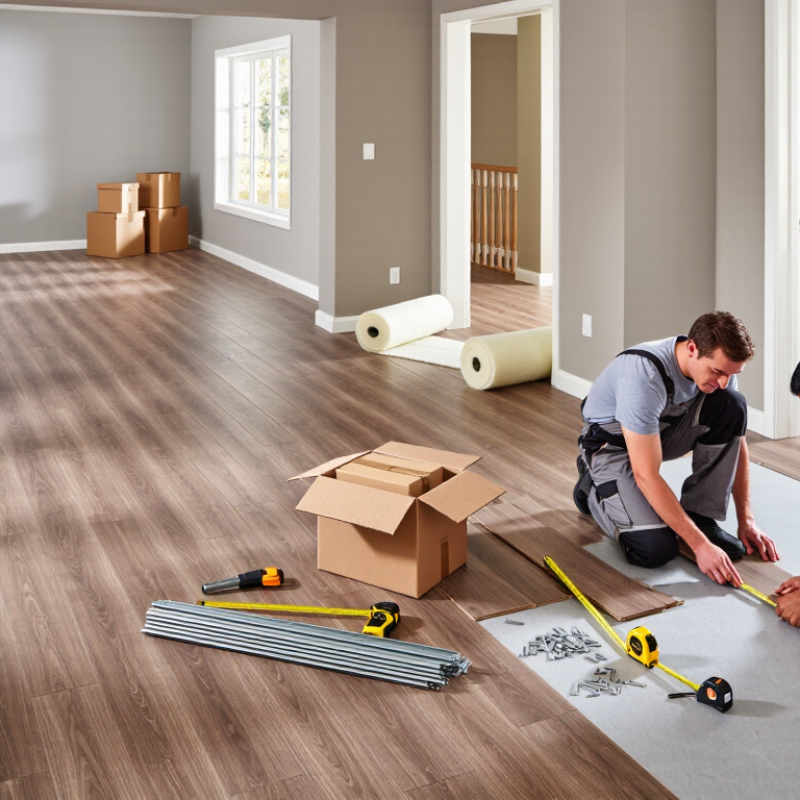
What LVP cost per square foot includes: flooring materials, installation labor, underlayment, old-floor removal, and subfloor preparation.
Typical 2026 U.S. planning estimates place a complete LVP installation at about $7.25 per square foot before taxes and moving furniture. A basic project may cost approximately $3.00–$4.50 per square foot, while projects requiring extensive removal or subfloor repairs can exceed $12.00 per square foot. Actual costs vary by location, room condition, layout, and project size.
How to Calculate LVP Material Costs Step by Step
To calculate LVP material cost in 2026, begin with accurate room measurements. Measure length and width in feet, then multiply them. For irregular rooms, divide the space into rectangles and add their areas. Write it down. Add 5% to 10% for cutting waste, with 10% safer for angled walls or small rooms. This allowance covers damaged edges and future repairs.
Check the product’s coverage per carton, not just the plank count. Divide adjusted square footage by carton coverage, then round up to whole cartons. Multiply the carton quantity by its price. Include underlayment, adhesive, and transition strips when required. Delivery, local taxes, and floor preparation can change the final material total. A simple worksheet prevents missed items. Example: 420 square feet plus 8% waste equals 453.6 square feet. If one carton covers 20 square feet, buy 23 cartons. At $42 per carton, flooring costs $966.
Add six transition strips at $18 each, totaling $108. Underlayment at $0.35 per square foot costs about $158.76. The estimated material total is $1,232.76 before tax and delivery. Divide that amount by the original 420 square feet for $2.94 per square foot. Keep invoices and carton labels for future repairs. Recheck the estimate after measuring closets and doorways. My early calculations often missed these areas.
How to Add Underlayment, Labor, and Extra Expenses
How to Calculate LVP Cost Per Square Foot in 2026?
A dependable LVP estimate starts with measured floor area, not a quick visual guess. Measure each room’s length and width, then add the areas together. Include closets if the same flooring will continue inside them. Add 8% to 12% for cutting waste, especially around doorways and angled walls. In a 500-square-foot project, 10% waste means ordering 550 square feet. My early estimates often missed small hallways. That mistake was expensive.
Underlayment may cost about $0.30 to $0.80 per square foot, depending on moisture control and sound requirements. Labor commonly ranges from $1.50 to $3.50 per installed square foot in 2026. Local conditions matter. Removing old flooring, moving furniture, repairing uneven subfloors, and trimming doors can change the quote quickly. Ask whether the installer prices labor by 500 installed square feet or by ordered material. Those numbers are not always identical.
Here is a practical example. Flooring costs $3.20 per square foot, underlayment costs $0.45, and labor costs $1.75. With 550 square feet ordered, flooring costs $1,760 and underlayment costs $247.50. Labor for 500 installed square feet costs $875. Add $180 for disposal, transitions, and minor preparation. The project total reaches $3,062.50, or about $6.13 per finished square foot. Keep a 5% to 10% contingency for hidden repairs. It is not a perfect forecast. But it is more honest than trusting a low base price.
How to Compare the Final LVP Cost With Your Budget
How to Calculate LVP Cost Per Square Foot in 2026?
Comparing the final LVP cost with your budget requires more than checking the flooring price. Measure each room, then add 8% to 12% for cutting waste. Irregular rooms may need more. A 500-square-foot project can require about 550 square feet of material. At $4 per square foot, the flooring alone costs $2,200.
Your real budget should include underlayment, installation, floor preparation, removal, transitions, delivery, and local taxes. Ask for an itemized quote. For example, $2,200 in flooring can become $4,100 after adding $900 for labor, $500 for preparation, $250 for trim, and $250 for other charges. Compare this final figure with your maximum budget, not with the product price. Leave at least 10% for surprises. Old floors often hide damage. I once underestimated preparation costs, and the mistake changed the entire plan.
Tips: Create three figures: expected, high, and maximum. Keep them visible during shopping. If the high estimate exceeds your budget, reduce room size or delay optional upgrades. Do not remove preparation costs too quickly. Uneven subfloors can cause movement, noise, and open seams later. Request written details about labor scope and repair allowances. Prices vary by region in 2026, so use recent local quotes. Recheck every measurement. Small errors multiply.
How to Calculate LVP Cost Per Square Foot in 2026? - How to Compare the Final LVP Cost With Your Budget
Illustrative 2026 planning estimate for a 1,000-square-foot installation. Currency: USD.
| Cost Category |
Calculation Basis |
Economy Project |
Mid-Range Project |
Premium Project |
| Project Assumptions |
| Flooring area |
Measured room area |
1,000 sq. ft. |
1,000 sq. ft. |
1,000 sq. ft. |
| Waste allowance |
Extra material for cuts and defects |
10% / 100 sq. ft. |
10% / 100 sq. ft. |
10% / 100 sq. ft. |
| Material quantity purchased |
Flooring area × 110% |
1,100 sq. ft. |
1,100 sq. ft. |
1,100 sq. ft. |
| Cost Calculation |
| LVP material |
Purchased quantity × material price |
$2,750
$2.50/sq. ft. |
$4,400
$4.00/sq. ft. |
$6,600
$6.00/sq. ft. |
| Underlayment or moisture barrier |
1,000 sq. ft. × unit rate |
$350
$0.35/sq. ft. |
$500
$0.50/sq. ft. |
$750
$0.75/sq. ft. |
| Professional installation |
1,000 sq. ft. × labor rate |
$1,750
$1.75/sq. ft. |
$2,750
$2.75/sq. ft. |
$3,750
$3.75/sq. ft. |
| Subfloor preparation |
Leveling, patching, or minor repairs |
$500
$0.50/sq. ft. |
$750
$0.75/sq. ft. |
$1,250
$1.25/sq. ft. |
| Existing-floor removal |
Removal and disposal allowance |
$0
Not required |
$750
$0.75/sq. ft. |
$1,250
$1.25/sq. ft. |
| Trim, transitions, and finishing |
Baseboards, reducers, thresholds, and accessories |
$500
$0.50/sq. ft. |
$850
$0.85/sq. ft. |
$1,250
$1.25/sq. ft. |
| Estimated sales tax |
7.5% applied to taxable materials and accessories |
$270 |
$431 |
$645 |
| Estimated final project cost |
All listed costs combined |
$6,120 |
$10,431 |
$15,495 |
| Final LVP cost per square foot |
Final project cost ÷ 1,000 sq. ft. |
$6.12/sq. ft. |
$10.43/sq. ft. |
$15.50/sq. ft. |
| Budget Comparison |
| Recommended comparison budget |
Target amount for the selected project level |
$8,000 |
$12,000 |
$16,000 |
| Budget difference |
Budget − final project cost |
$1,880 remaining |
$1,569 remaining |
$505 remaining |
| Budget status |
Compare the final cost with the planned budget |
Within budget |
Within budget |
Nearly at budget limit |
Planning note: Actual 2026 costs can vary by location, room layout, flooring thickness, subfloor condition, removal requirements, labor availability, taxes, and permit requirements. Request itemized estimates and confirm whether preparation, trim, disposal, and tax are included before approving the project.