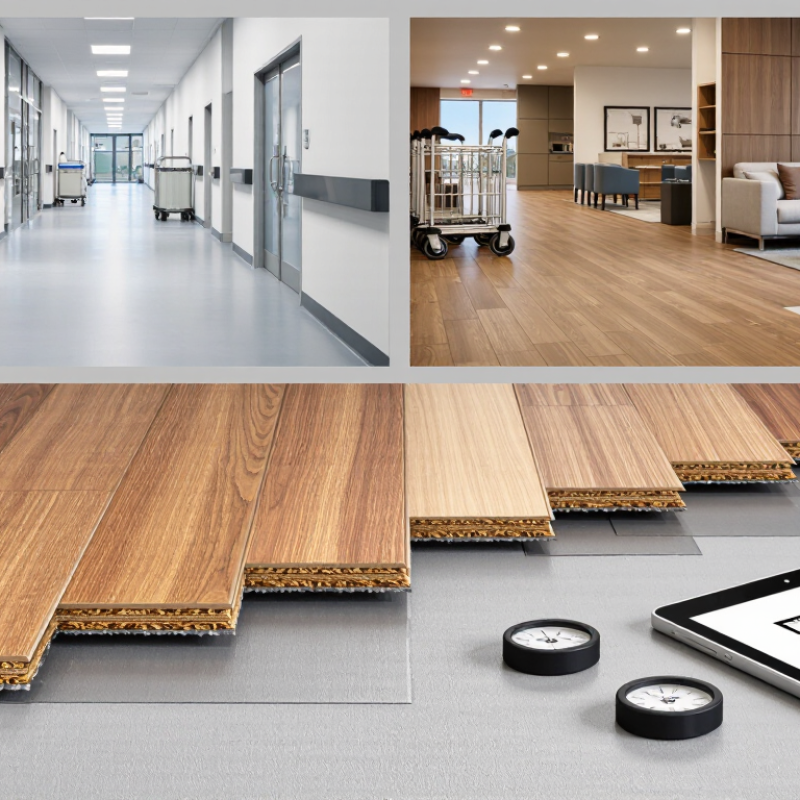
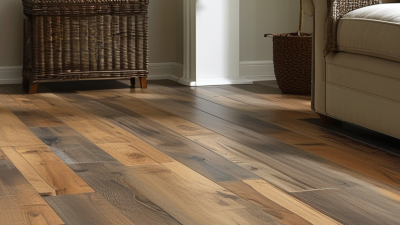
The 2026 flooring market is moving toward surfaces that combine visual realism, installation stability, and easier maintenance. Glued Down Vinyl Flooring remains important for commercial buildings, retail stores, healthcare spaces, and demanding residential rooms. Unlike floating products, it bonds directly to the subfloor. That connection can reduce movement, improve dimensional control, and create a quieter underfoot feel.
Industry data supports continued attention to this category. Fortune Business Insights reports strong growth in the global luxury vinyl tile market, driven by renovation, waterproof performance, and wood-look design demand. Grand View Research also identifies resilient flooring as a growing global segment, supported by residential construction and commercial refurbishment. These reports use different market definitions. Their figures should not be compared mechanically. Forecasts are useful, but never perfect.
Real buying decisions require more than attractive photographs. Installers typically examine concrete moisture, surface flatness, adhesive compatibility, and room temperature before laying the first plank. A poorly prepared slab can telegraph small ridges through a finished floor. Heavy display racks, rolling chairs, and hotel luggage carts also test bond strength over time. Product thickness, wear-layer construction, dimensional stability, fire performance, and indoor air quality documentation deserve careful review. Relevant references may include ASTM flooring methods, ISO standards, and manufacturer technical data sheets.
No product wins every room. Some buyers may prefer floating installation for speed or future replacement. Others need the firm, permanent feel of a fully bonded system. This guide evaluates 2026 options for global buyers, while recognizing regional climate, substrate practices, certification requirements, and installer skill. The best selection is not simply the most expensive one. It is the product that performs predictably in its actual environment.
Glued-down vinyl flooring is a resilient floor covering fixed directly to a prepared subfloor with adhesive. It usually comes as luxury vinyl planks, tiles, or sheets. Unlike floating flooring, it does not click together over an underlayment. The adhesive creates continuous contact, reducing movement under rolling chairs, carts, and frequent foot traffic.
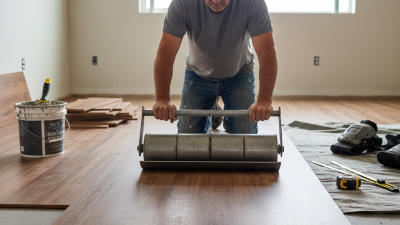
Installation depends heavily on preparation. The concrete must be clean, dry, smooth, and structurally sound. Installers commonly check moisture using ASTM F2170 or ASTM F1869 methods. Small ridges can telegraph through thin vinyl. That mistake is difficult to hide later. Adhesive is spread with the specified trowel, then the flooring is pressed firmly with a heavy roller. Open time matters. If the adhesive skins over, bonding may weaken.
The market is expanding. Grand View Research estimated the global vinyl flooring market at about US$39.78 billion in 2023, with projected growth from 2024 to 2030. That demand reflects practical benefits, including water resistance, design flexibility, and easier replacement of damaged tiles. However, glued-down flooring is not automatically the best choice for every project. Removal can be laborious, and poor subfloor testing may cause bubbling or bond failure. In real installations, climate, building use, adhesive compatibility, and installer skill often matter more than appearance alone.
2026 Best Glued Down Vinyl Flooring for Global Buyers?
Key Performance Factors for Choosing Vinyl Flooring in 2026
Choosing glued down vinyl flooring requires more than comparing colors and prices. Performance begins with the wear layer, which should match traffic levels and cleaning routines. Busy retail areas need stronger abrasion resistance than quiet bedrooms. Surface texture also matters. Deep patterns may look realistic, but they can hold dust.
Moisture behavior deserves close attention. Vinyl resists surface water, yet the subfloor must be dry, flat, and stable. A simple moisture test can prevent bubbles, loose edges, and adhesive failure. Temperature changes matter too. Flooring should acclimate inside the installation area before fitting. In colder warehouses, rushing this step can create avoidable problems.
Adhesive compatibility is another key factor. Use a product tested for the flooring type, subfloor, and expected climate. Low-emission materials are increasingly important for schools, offices, and homes. Slip resistance, sound reduction, and fire performance should be checked through reliable technical documents, not vague sales claims. Request test data and installation guidance.
Think beyond the first year.
Maintenance can expose weak decisions. Dark floors may reveal dust, while heavily textured surfaces can slow cleaning. No option performs perfectly everywhere. A balanced choice considers traffic, moisture, local temperature, cleaning habits, and installer skill. Sometimes, a slightly less attractive floor delivers better long-term value. That trade-off deserves honest review.
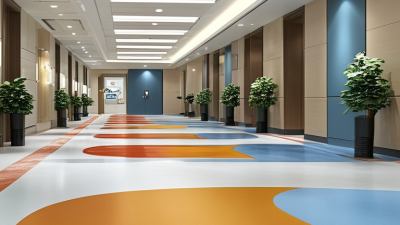
For global applications, glued-down vinyl flooring should match the building, climate, and maintenance routine. No single type works everywhere. In humid coastal projects, sheet vinyl can reduce seams and limit water entry around joints. It suits hospitals, schools, and large service areas when welded correctly. Installation quality matters more than many buyers expect.
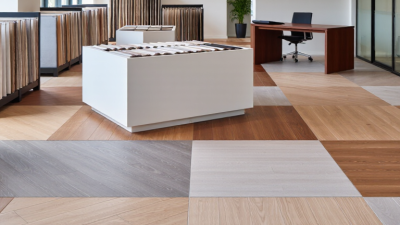
Luxury vinyl tile and plank offer realistic wood or stone visuals with flexible layout options. They work well in retail stores, offices, hotels, and apartments. Smaller pieces simplify replacement after local damage. However, more joints demand careful subfloor preparation and accurate adhesive coverage. Uneven concrete may telegraph through the surface later. I have seen attractive flooring fail because installers rushed moisture testing.
Homogeneous vinyl is dense throughout its thickness, making it useful for heavy traffic and frequent cleaning. Heterogeneous vinyl combines multiple layers and can provide stronger visual design or improved comfort. Conductive and static-control options support selected technical environments, but they require verified electrical performance. Buyers should check slip resistance, fire classification, indoor air emissions, and local installation rules. Adhesive selection must suit temperature, humidity, and substrate conditions during shipment and fitting. This part is often underestimated. A cooler warehouse can change installation timing. Even experienced teams should test a small area before full installation. A second review is worthwhile.
2026 Best Glued Down Vinyl Flooring for Global Buyers?
Installation starts below the flooring. ASTM F710 requires concrete substrates to be clean, smooth, dry, and structurally sound. Moisture testing remains essential. ASTM F2170 uses in-situ relative humidity readings, while ASTM F1869 measures calcium chloride vapor emissions. Follow the adhesive manufacturer’s limit, not a convenient guess. Small errors can cause bubbles, open seams, or permanent staining.
Subfloor preparation should remove dust, curing compounds, grease, and loose particles. Concrete may need grinding or mechanical preparation. Wood panels require secure fastening, flatness, and compatible underlayment. Uneven areas should be corrected before adhesive application. Keep the room near its final service temperature. Acclimate the flooring and adhesive according to their technical data sheets.
Humidity changes everything. A 2024 report by Fortune Business Insights valued the global vinyl flooring market at approximately 40.79 billion US dollars in 2023. Growth increases installation pressure, but faster work is not better work. Select an adhesive for the flooring construction, substrate, traffic level, and moisture exposure. Pressure-sensitive products can support future replacement, while wet-set adhesives may suit demanding commercial areas. Read the open time carefully. It is often shorter than expected.
Use the correct trowel size and replace worn blades. Roll the surface with the specified flooring roller. Check several seams before the adhesive skins over. Installation standards vary by region, and translations can hide important limits. That deserves a second review. A rushed project may pass inspection today but fail during seasonal movement.
Installation standards, subfloor preparation, and adhesive selection benchmarks
The chart summarizes commonly used resilient-flooring benchmarks: concrete relative humidity is typically screened between 75% and 85% RH depending on the adhesive system, surface pH is commonly maintained within 7–10, and subfloor flatness is often limited to 4.8 mm over 3 m. Always confirm the flooring and adhesive technical data sheets before installation.
2026 Best Glued Down Vinyl Flooring for Global Buyers?
Glued-down vinyl flooring can suit busy homes, retail areas, and light commercial spaces. Its fixed installation reduces movement under furniture and rolling loads. In my installation experience, floor preparation matters more than product appearance. A dry, level subfloor prevents visible ridges and early adhesive failure. However, preparation adds labor costs, especially where skilled installers are limited.
Purchase prices vary by thickness, wear layer, adhesive system, and shipping distance. International buyers should request full specifications, carton dimensions, technical data, and spare-plank availability. Import duties, port fees, currency changes, and inland transport can alter the final cost. A low factory price may not remain low. Allow extra material for cuts and future repairs.
Maintenance is simple when sand is removed regularly and spills are cleaned with a neutral cleaner. Avoid excessive water and harsh solvents. Sustainability requires closer inspection. Ask about recycled content, product emissions, packaging, and disposal guidance. Vinyl flooring is durable, but disposal can be difficult in some regions. Certifications should be verified through official documents, not sales language alone. Local climate also matters; heat, humidity, and ultraviolet exposure may affect adhesives and color stability. I would not promise identical performance everywhere. The trade-off is real.
| Evaluation Dimension | Glued-Down LVT/LVP | Glued-Down Vinyl Sheet | Global Buyer Consideration |
|---|---|---|---|
| Typical Product Format | Planks or tiles installed directly over a prepared subfloor with adhesive. | Flexible rolls installed with adhesive; seams may be heat-welded in demanding areas. | Confirm dimensions, roll width, carton size, pallet configuration, and installation method before requesting a quotation. |
| Indicative Product Cost | Approximately US$8–35 per m², depending on thickness, wear layer, design, and specification. | Approximately US$6–25 per m², depending on construction, backing, pattern, and performance class. | These are broad 2026 planning ranges, excluding freight, duties, taxes, wastage, adhesive, and installation. Obtain a project-specific quotation. |
| Indicative Installed Cost | Approximately US$25–70 per m², including typical subfloor preparation and installation. | Approximately US$20–55 per m², with higher costs for complex layouts, welding, or extensive preparation. | Local labor rates, subfloor condition, import duties, adhesive selection, and project location can materially change the total cost. |
| Common Thickness | Typically about 2.0–3.0 mm for commercial glued-down products; thicker options are available. | Typically about 1.5–2.5 mm for commercial sheet products. | Thickness alone does not determine durability. Check wear layer, construction, backing, and applicable performance standards. |
| Wear Layer | Common commercial wear layers are approximately 0.30–0.70 mm; heavy-use products may be specified above this range. | Performance depends on the homogeneous or heterogeneous construction rather than a separate wear layer alone. | Match the wear specification to traffic, rolling loads, footwear, cleaning chemicals, and expected replacement cycle. |
| Expected Service Life | Approximately 10–20 years in residential or light-commercial use when correctly installed and maintained. | Approximately 10–25 years in commercial settings, depending on product construction, traffic, and maintenance. | Service-life estimates are not guarantees. Request tested classification, warranty terms, and maintenance requirements for the target market. |
| Subfloor Requirements | Requires a clean, dry, smooth, structurally sound, and dimensionally stable subfloor. | Requires careful smoothing because irregularities can telegraph through the flexible sheet. | Moisture testing and leveling can represent a significant part of the installed budget, especially on concrete slabs. |
| Water Resistance | The vinyl surface is water-resistant; open joints or poorly bonded edges can allow moisture beneath the flooring. | Provides fewer field seams than plank or tile, and heat-welded seams can improve hygiene and moisture management. | Neither format should be treated as a substitute for correcting structural moisture, leaks, or hydrostatic pressure. |
| Routine Maintenance | Regular dust removal, damp mopping with a neutral cleaner, prompt spill removal, and periodic deep cleaning. | Similar routine care; fewer seams may simplify cleaning in healthcare, education, and high-hygiene environments. | Avoid abrasive pads, solvent-based products, excessive water, and cleaning chemicals not approved for resilient flooring. |
| Repairability | Individual damaged planks or tiles can often be replaced if spare stock and compatible adhesive are available. | Localized repairs are possible but may be more visible and technically demanding, particularly with patterned sheet goods. | Purchase extra material from the same production batch and retain batch numbers for future repairs. |
| Installation Waste | Usually about 5–10% for straightforward layouts; complex patterns may require more. | Often about 5–15%, depending on room geometry, roll width, pattern matching, and seam planning. | Include realistic waste in landed-cost calculations rather than comparing only the nominal price per m². |
| Sustainability Profile | Long service life and low maintenance can reduce lifecycle impacts, but production and end-of-life management remain important. | Material efficiency can be favorable because of roll production, although backing layers and installation waste affect the overall footprint. | Request a product-specific EPD or lifecycle information. Do not rely solely on generic recycled-content or “green” claims. |
| Recycled Content | May contain pre-consumer or post-consumer recycled content, but the percentage varies by product and region. | May include recycled backing or manufacturing scrap, subject to performance and regulatory requirements. | Verify the percentage, source, calculation method, and whether recycled content is in the backing, core, or total product. |
| Indoor Air Quality | Emissions depend on the flooring, adhesive, backing, and installation conditions. | The same adhesive and indoor-emission considerations apply; seams and welding materials may also be relevant. | Request current VOC-emission test results and select a compatible low-emission adhesive approved for the destination market. |
| Adhesive Requirement | Requires pressure-sensitive, wet-set, or other specified adhesive according to the product and subfloor. | Requires adhesive suitable for sheet flooring, including open-time and seam-treatment requirements. | Buying the wrong adhesive can void warranties and cause bubbling, shrinkage, staining, or bond failure. |
| Fire and Slip Performance | Performance varies by construction, surface treatment, and installation system. | Commercial grades may offer enhanced slip, fire, and hygiene performance, subject to testing. | Specify the test method required by the destination country instead of comparing unsupported rating names. |
| Climate and Storage | Store flat, dry, and protected from extreme temperature changes; acclimatize before installation as instructed. | Store rolls upright or as specified by the manufacturer and protect them from deformation and moisture. | Confirm temperature and humidity limits for ocean transit, customs storage, and the installation site. |
| International Documentation | Commonly supplied with technical data sheets, installation instructions, safety documents, and packing lists. | Requires equivalent documentation, with roll dimensions and seam-welding information clearly stated. | Confirm commercial invoice, packing list, certificate of origin, product test reports, and any destination-specific declarations. |
| Customs Classification | Vinyl floor coverings are often considered under HS heading 3918, but the exact subheading depends on product form and composition. | May also fall under HS heading 3918, subject to the importing country’s tariff schedule and classification rules. | Ask the importer or customs broker to verify the current tariff code, duty rate, taxes, and applicable trade measures. |
| Best-Fit Applications | Homes, offices, retail areas, hospitality spaces, classrooms, and moderate-to-heavy commercial areas when correctly specified. | Healthcare, education, corridors, laboratories, retail, and other spaces where fewer seams and easier cleaning are valuable. | Select according to traffic, hygiene requirements, rolling loads, acoustic needs, moisture exposure, and local installer capability. |
| Main Advantages | Wide design range, relatively efficient repairs, stable appearance, and suitability for detailed layouts. | Fewer seams, strong cleanability, good design continuity, and suitability for coved or welded installations. | The best option depends on lifecycle cost and local installation quality, not only on the initial purchase price. |
| Main Limitations | Requires excellent subfloor preparation and careful adhesive application; seams can collect dirt if poorly installed. | Pattern matching, roll handling, seam welding, and localized repair can require specialized labor. | Evaluate installer training, spare-material availability, warranty support, and after-sales service in the destination country. |