How to Buy Plastic PVC Carpet for Global Sourcing?
Buying Plastic Pvc Carpet for global sourcing requires more than comparing online prices. Buyers must examine material quality, factory capability, documentation, and delivered cost. A roll may look attractive in a product image, yet feel brittle after repeated folding or develop curling at the edges. Samples reveal problems.
This guide explains how experienced sourcing teams evaluate PVC carpet before placing an international order. It covers PVC composition, surface texture, backing stability, thickness, roll width, color consistency, packaging, and production capacity. Request a physical sample, technical data sheet, and recent quality records. Check whether the supplier can maintain the same pattern across multiple production batches. Small differences can become expensive when hundreds of rolls reach a warehouse.
Supplier verification also matters. Review factory photos carefully, ask about inspection procedures, and confirm testing methods with independent laboratories when necessary. Depending on the destination market, buyers may need documents related to chemical safety, fire performance, labeling, or restricted substances. Requirements can vary by country and product application, so current local rules should be checked with qualified professionals. Never rely on a certificate image alone.
Freight changes the real price. Calculate carton or roll dimensions, container utilization, import charges, inland delivery, and possible damage allowances. Details decide value. I have seen buyers focus too heavily on the lowest quotation and overlook weak packaging or inconsistent thickness. That approach often fails. A better decision balances quality, compliance, communication, lead time, and long-term reliability. The process is not perfect, but careful records and honest supplier discussions reduce avoidable surprises.
Define Your PVC Carpet Application and Performance Requirements
How to Buy Plastic PVC Carpet for Global Sourcing?
Define Your PVC Carpet Application and Performance Requirements
PVC carpet selection should begin with the installation environment, not the catalog color. A hotel corridor needs abrasion resistance, quiet walking comfort, and easy cleaning. A warehouse may require stronger load tolerance and better resistance to oils. For wet rooms, check slip performance, dimensional stability, and seam protection. Outdoor applications demand resistance to ultraviolet exposure, moisture, and temperature changes.
Industry estimates show resilient flooring remains a large and expanding category. Grand View Research reported a global resilient flooring market value of approximately USD 40 billion in 2023, with continued growth expected through 2030. That trend increases supplier choice, but also increases quality variation. Ask suppliers for measured test results, not general claims. Useful documents include abrasion testing, dimensional-change data, fire-performance classification, and chemical-resistance results. Confirm the test methods, sample thickness, and laboratory date.
I once focused too heavily on surface appearance. That was a mistake. A sample looked durable, yet its backing curled after repeated temperature changes. Request samples in the exact construction, thickness, texture, and backing proposed for production. Test them under realistic conditions: rolling loads, damp cleaning, sharp furniture feet, and repeated foot traffic. ASTM and ISO methods can support comparison, but a laboratory result may not represent every installation. Define acceptable limits in writing before requesting quotations. Otherwise, “commercial grade” remains unclear.
Compare PVC Carpet Types, Materials, Textures, and Construction Methods
How to Buy Plastic PVC Carpet for Global Sourcing?
When sourcing PVC carpet, compare construction before comparing color. Homogeneous PVC flooring uses one solid wear layer. It resists pattern loss better. Heterogeneous products combine backing, printed film, wear layer, and surface coating. Cushion-backed tiles feel softer but may require stricter compression testing. Roll goods reduce joints. Tiles simplify replacement. That difference affects labor, waste, and shipping volume.
Material composition deserves closer inspection. Ask for PVC resin content, plasticizer type, stabilizer details, filler percentage, and backing structure. A glass-fiber layer can improve dimensional stability. Too much mineral filler may reduce flexibility.
Textures also change performance. Smooth surfaces clean easily. Embossed surfaces hide scuffs but can retain dust. Deep textures may look premium, yet they increase cleaning effort. Small details matter.
Construction methods include calendering, coating, lamination, and heat fusion. Calendered sheets usually offer consistent thickness. Coated structures can create sharper printed designs. Request thickness maps, peel-strength results, dimensional-change data, and slip-resistance reports.
The European PVC industry’s VinylPlus Progress Report 2024 recorded 810,775 tonnes of PVC recycled in Europe during 2023, showing why recycled-content claims need documented chain-of-custody evidence. PlasticsEurope’s Plastics—the Fast Facts 2023 reported 400.3 million tonnes of global plastics production in 2022, reflecting a large but complex supply base.
I would still sample every production lot. A beautiful sample can hide uneven backing, weak seams, or odor after installation. That is the uncomfortable part of global sourcing.
Evaluate Suppliers, Certifications, Samples, and Production Capabilities
How to Buy Plastic PVC Carpet for Global Sourcing?
A reliable supplier should explain the PVC carpet’s composition, backing, dimensions, and intended use clearly. Ask for factory registration, quality procedures, and recent production records. ISO 9001 may indicate controlled processes, but it does not prove product performance. Check whether certificates cover the exact carpet structure, not merely the factory.
Request current test reports for abrasion, slip resistance, colorfastness, odor, and restricted substances. Requirements vary by destination, so confirm applicable chemical and safety standards before ordering. Verify the laboratory, report date, sample identity, and test method. Paperwork can look convincing. It can still be incomplete.
Samples reveal details that specifications often miss. Inspect edge cutting, surface texture, backing adhesion, roll flatness, and smell after unpacking. Place a sample near sunlight and under repeated foot traffic for several days. Ask for production samples, not only showroom pieces. Confirm minimum order quantity, roll length, width tolerance, packaging strength, and container loading plans. Visit the facility, or arrange an independent inspection, to review mixing equipment, coating lines, curing controls, and batch traceability. A supplier may promise stable color, yet small batches can differ noticeably. I would record these differences instead of ignoring them. That extra note may prevent a costly rework request later.
How to Buy Plastic PVC Carpet for Global Sourcing?
A practical 100-point buyer scorecard for evaluating PVC carpet suppliers, certifications, samples, and production capabilities. The weighting is a procurement framework and does not represent any specific company or brand.
How to use it: Verify REACH and RoHS documentation where required, request relevant fire-performance test reports such as ASTM E648 or EN 13501-1, approve production samples before ordering, confirm monthly capacity and lead time, and compare total landed cost rather than unit price alone.
Calculate Global Sourcing Costs, Shipping Terms, and Import Requirements
Global sourcing PVC carpet starts with a realistic landed-cost model.
Record the factory price, packaging, inland transport, ocean freight, insurance, duty, VAT, brokerage, inspection, and port storage. Add a currency buffer of 3–5%. It feels cautious, but exchange rates can quickly damage margins. UNCTAD reports that ships carry over 80% of global merchandise trade by volume, making freight volatility a serious purchasing variable.
Compare Incoterms carefully.
FOB can provide stronger control over main freight, while CIF may simplify quotations but hide destination charges. DDP appears convenient, yet the buyer should confirm who legally handles import declarations, taxes, and product compliance. The World Bank’s 2023 Logistics Performance Index assessed 139 economies and showed significant differences in customs efficiency, infrastructure, and delivery timeliness. Location matters.
Ask for the product composition, roll dimensions, gross weight, packing list, commercial invoice, and test documents before payment.
PVC flooring may require different tariff classification depending on its structure and use, so verify the HS code with a licensed customs broker. Check fire performance, chemical restrictions, labeling, and local packaging rules in the destination market. Request a pre-shipment sample. I would also calculate container utilization using actual roll diameters, not estimated figures. That mistake is common. Reports provide benchmarks, not guarantees; real port charges still need written confirmation from the forwarder.
Inspect Quality, Confirm Contracts, and Manage International Delivery
How to Buy Plastic PVC Carpet for Global Sourcing?
Buying plastic PVC carpet internationally requires more than comparing quotations. Request a production sample with the exact surface pattern, thickness, color, and backing. Measure it yourself. A “2 mm” product may vary across the roll. Check edge cutting, surface uniformity, odor, flexibility, and slip performance. Ask for abrasion and chemical-resistance test data when the carpet will serve shops, workshops, or vehicles. Independent inspection before shipment can reveal problems that photos hide. Small details matter.
Put every requirement in the contract. State roll length, width tolerance, weight, packaging method, inspection standard, delivery date, and acceptable defect rate. Define who pays for rework, replacement, storage, or a delayed shipment. Confirm payment milestones and the agreed delivery term. Vague wording creates expensive arguments. I once treated packaging as a minor issue; crushed corners later proved otherwise. That mistake deserves repeating only once.
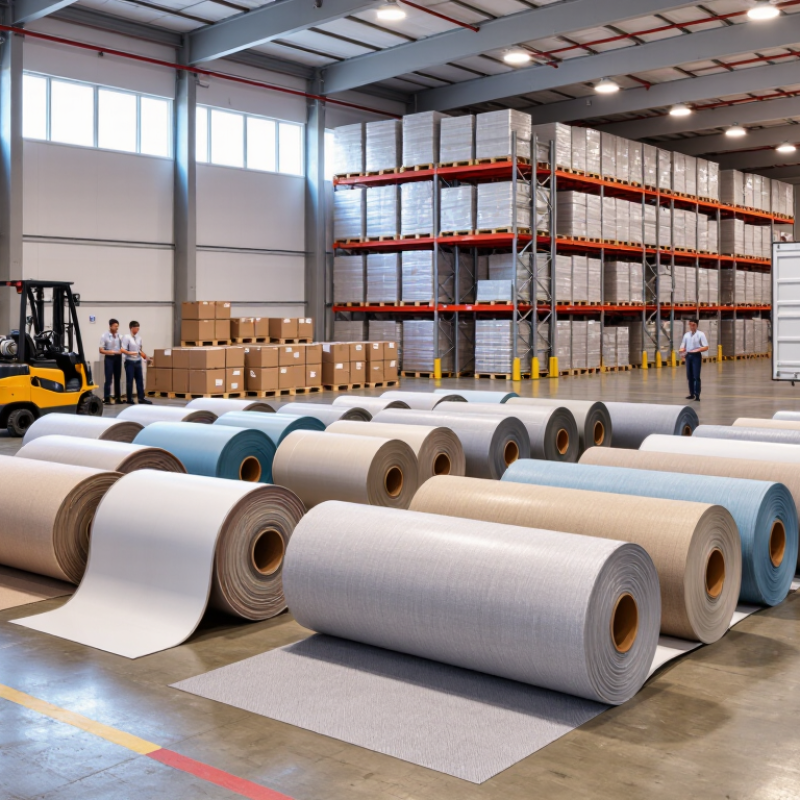
International delivery needs a practical schedule. Confirm production time, inspection time, port handling, customs documents, and inland transport separately. Use moisture-resistant wrapping and strong cores for long journeys. Record roll numbers and photograph loaded pallets before sealing the container. Track temperature and humidity if storage conditions are uncertain. Leave some time for port congestion. It feels inefficient, but rushed planning often costs more. Keep a written claim process, with deadlines and evidence requirements, so a quality dispute does not become a guessing game.