Why Choose Vinyl Floor Carpet for Global Projects?
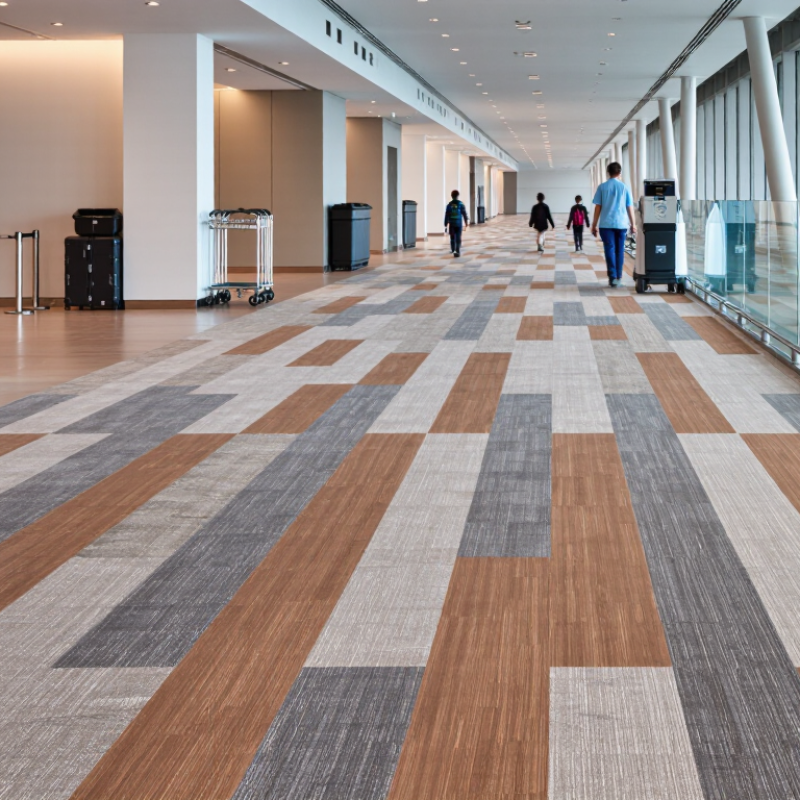
Global construction teams are rethinking floor specifications. Vinyl Floor Carpet offers resilient performance, design flexibility, and comparatively simple maintenance across demanding environments. It can resemble timber, stone, or woven textiles while supporting rapid commercial installation.
Grand View Research valued the global resilient flooring market at approximately USD 40 billion in 2023. Its report also identifies vinyl products as a major growth segment. Fortune Business Insights projects continued expansion in the vinyl flooring market through 2032. These figures are useful, but they are not identical. Different definitions and regional coverage can change the result.
Real project experience matters more than market size alone. In a hotel corridor, a textured surface can reduce visible scuffs near luggage routes. In a school, sealed joints and appropriate slip resistance deserve closer attention. In healthcare spaces, cleaning chemicals and rolling loads must be tested before approval. Small details decide long-term value.
Dean Thompson, former president and CEO of the Resilient Floor Covering Institute, has described resilient flooring as a category where “performance, design, and value” must work together. That principle remains practical for international specifications. However, Vinyl Floor Carpet is not automatically suitable everywhere. Subfloor moisture, local standards, adhesive compatibility, and installer skill can change the outcome. A beautiful sample may fail on an unstable slab.
For global projects, the strongest choice is evidence-based. Compare lifecycle cost, environmental documentation, maintenance demands, and regional availability before signing off. This approach is less glamorous. It is usually more reliable.
Why Choose Vinyl Floor Carpet for Global Projects?
Vinyl floor carpet is a practical term for carpet-like vinyl flooring, often supplied in tiles or flexible sheets. It is not carpet, strictly speaking. Its surface combines a printed design layer, a transparent wear layer, and a resilient vinyl backing. Some products also include acoustic or cushioned layers.
The structure protects the pattern from daily traffic, moisture, and repeated cleaning. It works through controlled flexibility. Tiles absorb minor movement, while the backing helps the floor stay stable over a prepared subfloor. Installation still depends on accurate moisture testing and careful seam alignment.
According to Grand View Research, the global resilient flooring market was valued at about 43.4 billion dollars in 2022, with projected growth through 2030. This demand reflects practical needs across offices, hotels, healthcare spaces, and transport facilities.
Vinyl flooring can reduce replacement time because damaged tiles are easier to remove than broad sheet sections. That matters on international projects with phased construction. The American Society for Testing and Materials also publishes performance standards covering resilient flooring properties, including dimensional stability and wear resistance.
Data helps, but it does not replace site experience. Poor subfloor preparation remains a common failure point.
Even premium-looking flooring can telegraph cracks, dust, or uneven concrete. Project teams should verify local climate, cleaning routines, fire requirements, and available installation skills before selecting the system.
It is durable, not indestructible.
Global projects need flooring that performs across different climates, schedules, and maintenance practices. Vinyl floor carpet offers water resistance, stable dimensions, and practical installation. These features suit hospitals, offices, hotels, schools, and temporary project spaces.
According to Grand View Research, the global resilient flooring market is projected to grow strongly through 2030, reflecting wider demand for durable surfaces. Vinyl flooring can support this demand through layered construction and protective wear surfaces. In busy corridors, it handles rolling carts, dropped objects, and repeated cleaning better than many soft floor materials. It also reduces installation time when supplied in modular formats. That matters when several rooms must open together.
Hygiene is another important feature. Smooth, sealed surfaces leave fewer places for dust and moisture to collect. Products tested against standards such as ISO 10582 can provide clearer performance references for international procurement teams. Low-emission documentation, slip resistance, and fire testing also help designers compare specifications across regions.
Yet vinyl floor carpet is not flawless. Poor subfloor preparation can cause visible joints or lifting. Acoustic comfort may also be weaker than thick textile carpet. Experienced teams should check humidity, adhesive compatibility, local fire rules, and cleaning methods before approval. Small details matter. A beautiful sample can still fail on site.
Vinyl floor carpet behaves differently across climates and building types. In humid tropical projects, its sealed surface handles frequent mopping and light splash exposure. However, seams and edges still need careful detailing. Moisture trapped beneath the floor can cause adhesive failure, blistering, or microbial growth. ASTM F710 provides procedures for testing concrete subfloors before installation. This step is often skipped under schedule pressure.
Cold climates create another problem. Materials should acclimatize inside the building before installation. Otherwise, shrinking or joint gaps may appear after heating begins. In coastal regions, sand can act like abrasive powder under shoes. Entry mats and regular cleaning become practical safeguards. They are not glamorous, but they protect the surface.
Building use also changes the specification. Healthcare areas need cleanable surfaces and tightly sealed joints. Schools require slip resistance, impact tolerance, and easy maintenance. Retail floors face concentrated traffic near entrances and checkout zones.
The U.S. Environmental Protection Agency reports indoor pollutant levels are often two to five times higher than outdoor levels. Low-emitting adhesives and verified installation therefore matter. The 2023 Global Status Report for Buildings and Construction states that buildings use 34% of global energy and create 37% of energy-related emissions. Flooring is only one small component, yet replacement frequency still affects lifecycle impact. Vinyl is useful, but not universally sustainable. That deserves honest review.
When buyers select vinyl floor carpet for global projects, appearance should not lead the decision. A lobby sample may look excellent, yet heavy luggage can expose weak wear resistance within months. I recommend testing samples under expected traffic, moisture, cleaning routines, and rolling loads. Ask for clear technical data, including wear-layer thickness, slip resistance, dimensional stability, and maintenance requirements. Numbers matter. Conditions vary.
Project teams should examine the subfloor before ordering large quantities. Uneven concrete, residual moisture, or weak adhesion can cause joints to open and edges to curl. Request installation guidance suited to the local climate and available labor skills. A breathable, easy-clean surface may suit a humid hotel corridor, while quieter construction may benefit offices. Check fire performance, indoor-air emissions, and accessibility requirements against applicable local standards. Do not rely on one certificate alone.
Cost comparison should include delivery, cutting waste, replacement pieces, cleaning, and downtime. A lower purchase price can become expensive after repeated repairs. Ask for batch consistency and color tolerance, especially when rooms are installed months apart. Keep extra material for future repairs, but avoid excessive stock that may age unused. From project reviews, I have learned that easy maintenance often beats dramatic texture. A perfect choice rarely exists. I have also seen attractive flooring fail because installers rushed the preparation. Record test results, installer feedback, and early wear observations for better future specifications.
What Should Buyers Consider When Selecting Vinyl Floor Carpet?
The values shown represent commonly specified vinyl flooring wear-layer levels and may vary according to application, construction, and regional standards.
Why Choose Vinyl Floor Carpet for Global Projects?
Installation quality decides more than appearance. Grand View Research estimated the global resilient flooring market at about US$39 billion in 2023. That scale reflects demand for practical, cleanable surfaces. Before installation, acclimatize vinyl floor carpet indoors for 48 hours. Keep the room between 18°C and 29°C. The subfloor must be dry, smooth, and firm. ASTM F710 recommends testing concrete moisture before adhesive application. Uneven areas can telegraph through the finished surface. A small mistake becomes visible later.
Maintenance needs discipline, not harsh chemicals. Remove sand daily in busy corridors with soft sweeping or vacuuming. Use a neutral cleaner and a damp mop. Avoid excess water near seams. The U.S. Environmental Protection Agency links effective indoor-air management with source control and ventilation. Therefore, choose low-emission adhesives and ventilate during installation. Maintenance records should note cleaner type, traffic zones, and damage dates. Real projects are rarely perfect. Some cleaning schedules fail during holidays or construction phases.
Replacement is usually localized when spare material is stored correctly. Keep matching rolls or tiles flat, sealed, and labeled by room. Cut damaged sections with a straight blade, then remove adhesive without gouging the subfloor. Install the replacement in the same direction and roll the seam firmly. Color variation may appear after sunlight exposure. That risk deserves honest planning. A professional inspection should check seams, moisture, adhesive failure, and subfloor movement before replacement.
| Project Dimension | Key Metric | Typical Data or Requirement | Practical Guidance for Global Projects |
|---|---|---|---|
| Material Selection | Product format | Sheet vinyl, vinyl composition tile, luxury vinyl tile, and luxury vinyl plank | Select sheet products for areas requiring fewer seams and choose tile or plank formats where localized replacement and design flexibility are priorities. |
| Material Selection | Water resistance | Vinyl surfaces are generally water-resistant; sheet systems can provide fewer joints than tile or plank systems. | Use compatible welded seams or properly sealed joints in wet or frequently cleaned areas. Water resistance does not replace a complete waterproofing system below the floor. |
| Material Selection | Wear-layer thickness | Common resilient-floor wear layers range from approximately 0.15 mm to 0.70 mm, depending on product class and traffic level. | Specify thicker wear layers for corridors, retail areas, education facilities, healthcare spaces, and other high-traffic applications. Always verify the manufacturer's technical data. |
| Material Selection | Slip resistance | Performance varies by surface texture, finish, contamination, and test method. | Specify a product tested to the slip-resistance requirements applicable in the project location and intended use. Keep the surface free from oil, dust, and excessive polish buildup. |
| Global Project Planning | Climate and acclimatization | Many vinyl products require acclimatization at stable indoor conditions, commonly around 18–27°C, before installation. | Follow the product instructions for temperature and duration. Protect flooring from direct sunlight, moisture, freezing temperatures, and large temperature fluctuations during storage and installation. |
| Global Project Planning | Subfloor moisture | Moisture limits vary by adhesive, substrate, and test method; common project testing includes relative humidity, calcium-carbide, or plastic-sheet methods. | Test concrete and other substrates before installation. Do not rely on visual dryness. Install an approved moisture-mitigation system when the measured result exceeds the flooring or adhesive requirement. |
| Global Project Planning | Subfloor flatness | A commonly specified tolerance for resilient flooring is approximately 3 mm in 1.8 m, but the exact requirement depends on the system. | Grind high spots, repair cracks, and use a compatible leveling compound for low areas. Uneven substrates can telegraph through thin vinyl surfaces and cause premature wear. |
| Installation | Substrate preparation | The substrate should be clean, dry, sound, smooth, and free from dust, grease, curing compounds, and loose materials. | Remove contaminants, repair defects, and confirm that the substrate is structurally stable. Existing flooring should only remain when it is firmly bonded, suitable, and approved for covering. |
| Installation | Layout and dry fitting | Plan sheet direction, tile or plank alignment, seam locations, transitions, and pattern repeats before applying adhesive. | Start from established reference lines and avoid placing narrow cut pieces at prominent edges. Coordinate layouts across rooms, doorways, and expansion or movement joints. |
| Installation | Adhesive application | Use the adhesive type, trowel notch, open time, and coverage rate specified for the selected flooring and substrate. | Apply adhesive evenly and avoid excessive adhesive, insufficient transfer, or installation after the adhesive has exceeded its working time. Different climates may affect open time and drying. |
| Installation | Seam treatment | Sheet seams may be chemically welded or heat welded when the product system allows; tile and plank joints are normally tightly fitted according to the design. | Use the approved seam method and trained installers in areas exposed to water, heavy cleaning, or wheeled traffic. Keep seams straight, clean, and properly aligned. |
| Installation | Rolling and bonding | Flooring is commonly rolled with a suitable floor roller after placement to improve adhesive transfer and reduce air pockets. | Roll in both directions where required by the installation instructions. Recheck edges, seams, corners, and transitions before the adhesive sets. |
| Installation | Post-installation protection | Light foot traffic and furniture movement should be restricted until the adhesive has developed sufficient bond strength; the timing varies by adhesive. | Protect the finished floor with breathable temporary covering. Prevent concentrated loads, rolling traffic, water, and aggressive cleaning until the floor is ready for use. |
| Maintenance | Routine cleaning frequency | Daily dust or debris removal is typical in busy commercial environments; less busy areas may require less frequent cleaning. | Use entrance mats, remove loose grit promptly, and clean according to actual traffic conditions. Sand and grit are major sources of surface abrasion. |
| Maintenance | Recommended cleaning method | Neutral-pH cleaner, microfiber mops, soft brushes, and properly adjusted automatic scrubbers are commonly used. | Use clean water and the correct dilution. Excess water should be controlled, especially at seams, perimeters, transitions, and areas with moisture-sensitive substrates. |
| Maintenance | Stain and spill response | Prompt removal is generally more effective than allowing contaminants to dry or chemically react with the surface. | Blot spills, use a compatible cleaner, and test unfamiliar chemicals in an inconspicuous area. Avoid abrasive pads and solvents unless specifically approved. |
| Maintenance | Furniture and equipment protection | Wide, smooth, non-staining glides and suitable load-distribution devices reduce indentation and scratching. | Lift rather than drag heavy items. Use protective mats under rolling chairs or equipment where the flooring system requires them, and inspect casters for damage. |
| Maintenance | Polish and coating requirements | Some vinyl products are designed for low-maintenance cleaning and do not require polish; others may permit a compatible finish. | Do not apply polish, wax, or coatings automatically. Follow the product care instructions because incompatible finishes can create slipperiness, discoloration, or difficult residue. |
| Maintenance | Inspection program | Monthly or quarterly inspections are practical for many commercial facilities, with more frequent checks in high-risk zones. | Inspect seams, corners, transitions, welds, surface wear, loose tiles, moisture signs, and damage from furniture or equipment. Record findings by room and date. |
| Replacement | Localized repair | Tile and plank formats can usually be replaced in individual sections when matching material is available. | Keep an allowance of unused material from the original installation. Store replacement pieces in a dry, temperature-controlled location and label them by area and batch where possible. |
| Replacement | Sheet repair | Small sheet defects may be repaired with compatible patching and seam-welding techniques, depending on damage location and product construction. | Use an experienced flooring contractor for patch repairs. Large, moisture-affected, or poorly bonded sections may require removal and replacement of a broader area. |
| Replacement | Removal criteria | Replacement is normally considered when flooring has widespread wear, recurring seam failure, permanent damage, loss of adhesion, or substrate-related problems. | Identify and correct the underlying cause before installing new material. Replacing flooring over unresolved moisture, movement, or substrate defects can repeat the failure. |
| Replacement | Removal and disposal | Removal methods depend on adhesive type, substrate condition, flooring format, and local regulations. | Control dust, protect adjacent finishes, and segregate waste where recycling or regulated disposal options exist. Verify whether the existing flooring or adhesive requires special handling before disturbance. |
| Service Life | Expected service period | Service life varies substantially; commercial resilient flooring may serve for many years when correctly specified, installed, and maintained. | Traffic, rolling loads, cleaning chemicals, sunlight, moisture, installation quality, and maintenance practices have greater influence than calendar age alone. |
| Sustainability | Material efficiency | Tile and plank formats can reduce the amount of flooring discarded when damage is limited to a small area. | Choose repairable formats where operational continuity and waste reduction are important. Confirm the availability of replacement material for the planned project duration. |
| Sustainability | Indoor air quality | Flooring and adhesive emissions depend on product formulation, installation conditions, and certification requirements. | Request current emissions documentation and use low-emission products where required by the project brief or local building standards. Provide adequate ventilation during installation. |
| Quality Control | Installation records | Useful records include product identification, batch or lot information, substrate test results, adhesive details, installation dates, and maintenance instructions. | Maintain a room-by-room handover file. Documentation supports warranty administration, future repairs, maintenance training, and consistent performance across international sites. |
| Global Project Planning | Local compliance | Fire performance, slip resistance, accessibility, emissions, waste handling, and testing requirements vary by country and building type. | Confirm applicable local codes and project specifications before procurement. Technical data from one market should not automatically be assumed to satisfy another jurisdiction. |